

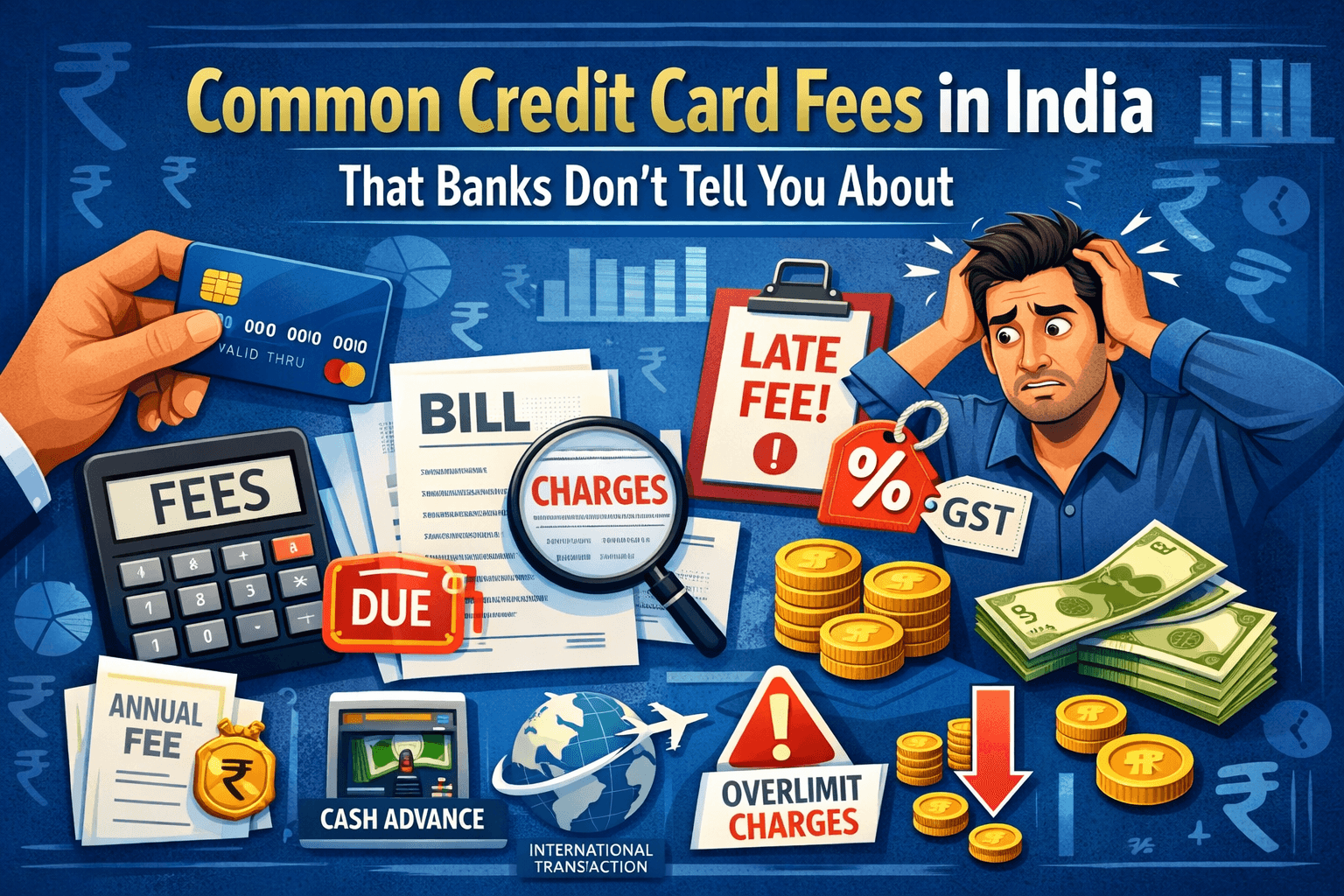
Credit cards have become an essential financial tool for many Indians, offering convenience, rewards, and the ability to build credit. However, alongside the benefits, most banks hide a range of fees that can erode the value you get from your card. This blog uncovers the most common credit card fees in India that banks often don’t highlight, explains why they exist, and shows you how to avoid or minimize them.
Most credit cards in India charge an annual fee, ranging from ₹500 to ₹5,000 depending on the card tier. Premium cards with travel or lifestyle perks typically have higher fees. While some banks waive the fee if you spend a certain amount each year, the condition is not always clearly communicated.
Choose a card whose fee matches your spending pattern – if you don’t travel much, a basic card may be cheaper.
Look for “no annual fee” cards or those that waive the fee after the first year.
Make sure to meet the spend‑threshold (e.g., spend ₹1 Lakh in a year) to get the waiver.
If you miss the payment due date, banks levy a late payment fee that can be anywhere between ₹500 and ₹1,500. Some banks also add a higher interest rate on the overdue amount.
Set up SMS/email reminders a few days before the due date.
Enable auto‑debit from your savings account to guarantee on‑time payment.
If you’re a first‑time defaulter, request a waiver – many banks are lenient for a one‑time slip.
Crossing your credit limit triggers an over‑limit fee, typically ₹500–₹1,000. This fee is charged even if the excess amount is repaid within the same billing cycle.
Keep track of your outstanding balance through the bank’s mobile app.
Request a temporary credit limit increase only when absolutely needed.
Set a personal spend limit lower than the bank‑issued limit.
Using your credit card for a cash withdrawal (ATM cash advance) attracts a cash advance fee of 2%–3% of the withdrawn amount, with a minimum of ₹500. Additionally, interest starts accruing immediately at a higher rate (usually 3.5% per month).
Avoid cash advances unless it’s an emergency.
If you must withdraw, keep the amount minimal and repay it within the same billing cycle to reduce interest.
When you make a purchase in a foreign currency, banks charge a foreign transaction fee of 3%–3.5% of the transaction value. This fee is often bundled with the conversion rate, making it hard to spot.
Choose a card that offers “zero foreign transaction fees” – several banks now provide this for premium cards.
Compare the card’s currency conversion markup with that of travel cards or prepaid forex cards.
Requesting a physical copy of your credit card statement can lead to a statement copy fee of ₹50–₹100 per copy. While digital statements are free, many users still request paper copies out of habit.
Switch to e‑statements through net banking or the bank’s mobile app.
If you need a hard copy for documentation, download the PDF and print it yourself.
Replacing a lost, stolen, or damaged card often incurs a fee of ₹200–₹500. Some banks waive this fee for premium cardholders.
Report loss immediately; many banks provide a free replacement within 24–48 hours.
Keep your card in a safe place and consider a card‑protecting sleeve.
Some banks levy an inactivity fee (₹200–₹500) if the card sees no transaction for 12–24 months. The fee is meant to encourage usage.
Make at least one small purchase each month (e.g., groceries or utility bills).
Set up an automatic recurring payment for subscriptions.
While most reward points are free to redeem, a few banks charge a nominal fee (₹50–₹100) for converting points to air‑miles or gift vouchers.
Check the redemption terms before accumulating points.
Prefer direct cash‑back or statement credit redemptions, which are usually fee‑free.
A few banks impose a pre‑payment penalty on credit card balances if you clear the amount before the due date, especially on promotional interest‑free periods.
Read the fine print of any “0% interest” offers.
If you plan to clear the balance early, choose a card without such a clause.
Read the fee schedule in the terms & conditions – banks must disclose them, but they’re often buried.
Compare cards on fee structures, not just rewards.
Set up alerts for due dates, limit usage, and cash advances.
Switch to digital statements and e‑notifications.
Regularly review your monthly statement for any unexpected charges.
Understanding the hidden fees associated with credit cards empowers you to choose the right product, use it wisely, and save money. By staying vigilant, leveraging digital tools, and selecting cards that match your spending habits, you can enjoy the benefits of credit without the surprise deductions that many banks keep under the radar.